RAMSES: Aldoria & ONERA’s Global Space Surveillance Network
RAMSES: Aldoria and ONERA deploy a global multispectral network for space surveillance, with support from France 2030
France 2030
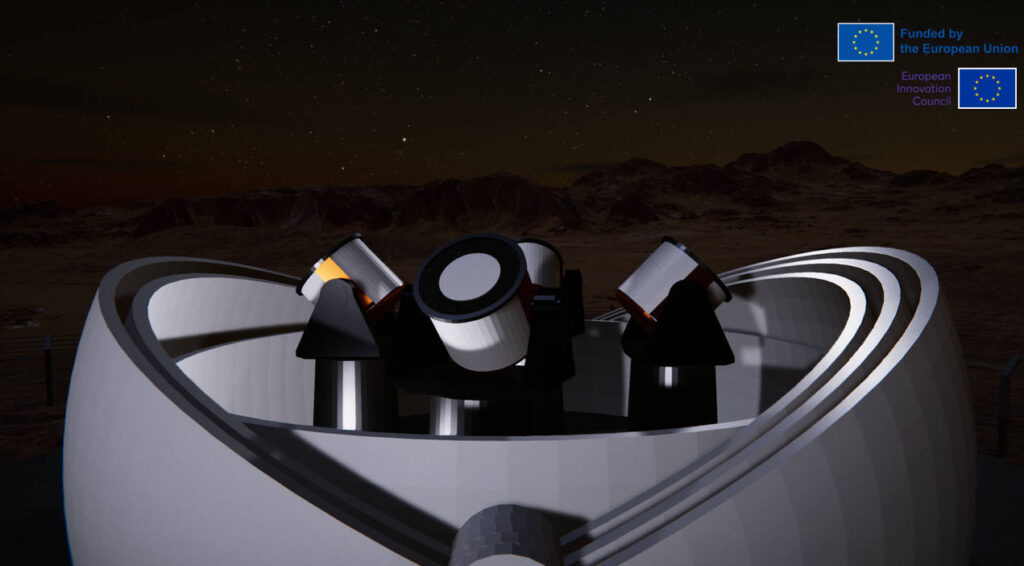
Paris, 17 November 2025 – Aldoria and ONERA (Office national d’études et de recherches aérospatiales) announce the launch of RAMSES (Réseau Avancé Multispectral pour la Surveillance de l’Espace et des Satellites), a €12 million programme supported by France 2030. Its goal is to develop and deploy five multi-telescope, multispectral stations across the globe.
Objective: to strengthen European Space Situational Awareness (SSA) by detecting, identifying, characterising and locating all space objects, both active and passive, in order to safeguard France’s and Europe’s freedom of access to and operations in space.
A matter of sovereignty and strategic credibility
The proliferation of objects in orbit, the rise in hostile behaviour and current dependence on foreign data are undermining Europe’s autonomous assessment of the space domain. RAMSES addresses this imperative by building an accurate, resilient and sovereign space situational awareness capability based on optical assets, serving civil and defence operations as well as European and international cooperation.
“RAMSES strengthens our existing network and takes European SSA to the next level: more revisit, more accuracy, more reliability and data fully controlled in Europe, end to end.” – Romain LUCKEN, CEO of Aldoria
“This project is part of the applied research activities that ONERA has been conducting for many years in the field of space surveillance with a view to sovereignty, notably through performance improvements to the GRAVES system and with the high-resolution optical observation asset PROVIDENCE currently under development.” – Jean-Marc Charbonnier, Space Programme Director at ONERA
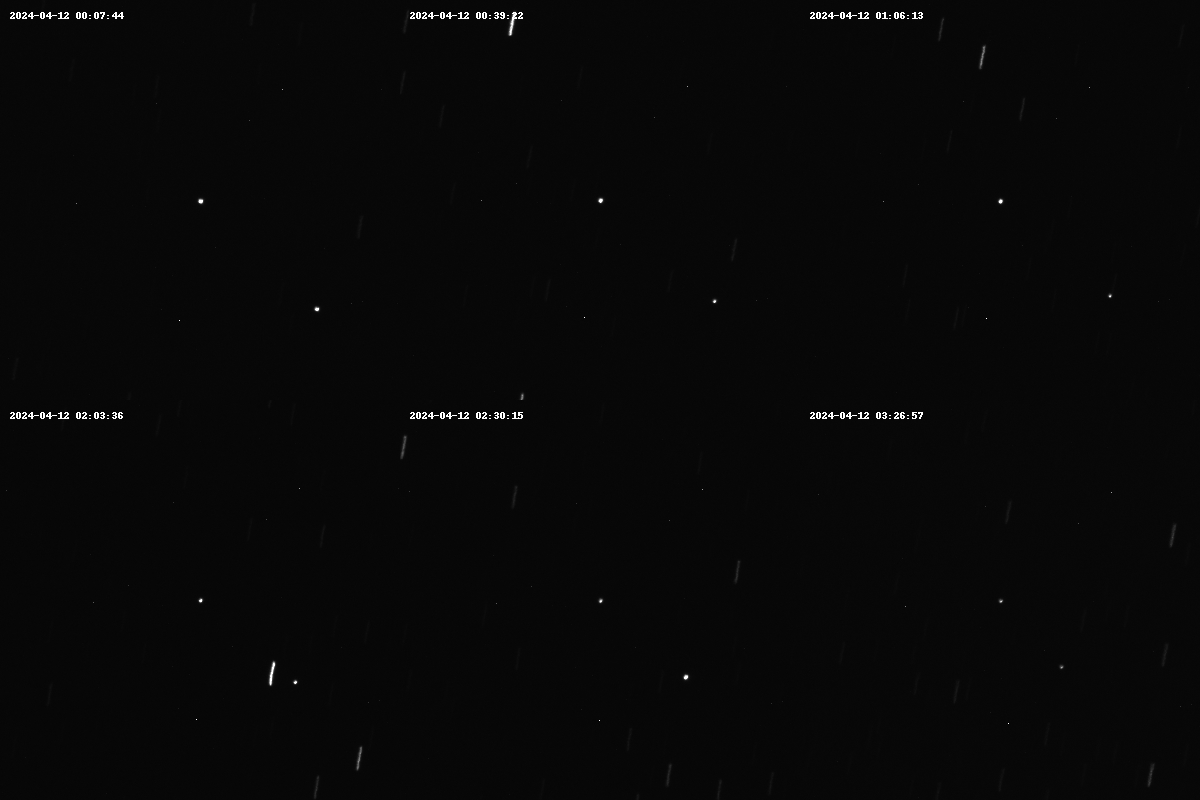
A first milestone has already been reached: daytime detection of low Earth orbit satellites has been demonstrated, confirming the network’s day/night tracking capability and its increased operational maturity.
A clear technological and industrial ambition
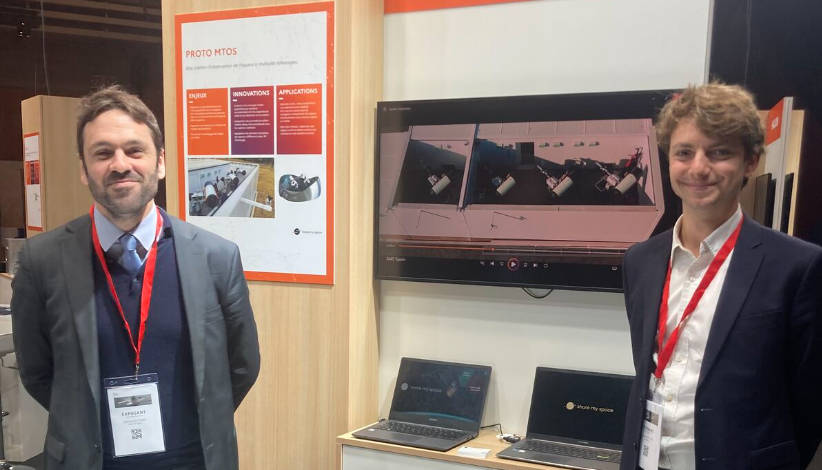
MSTOS multispectral stations
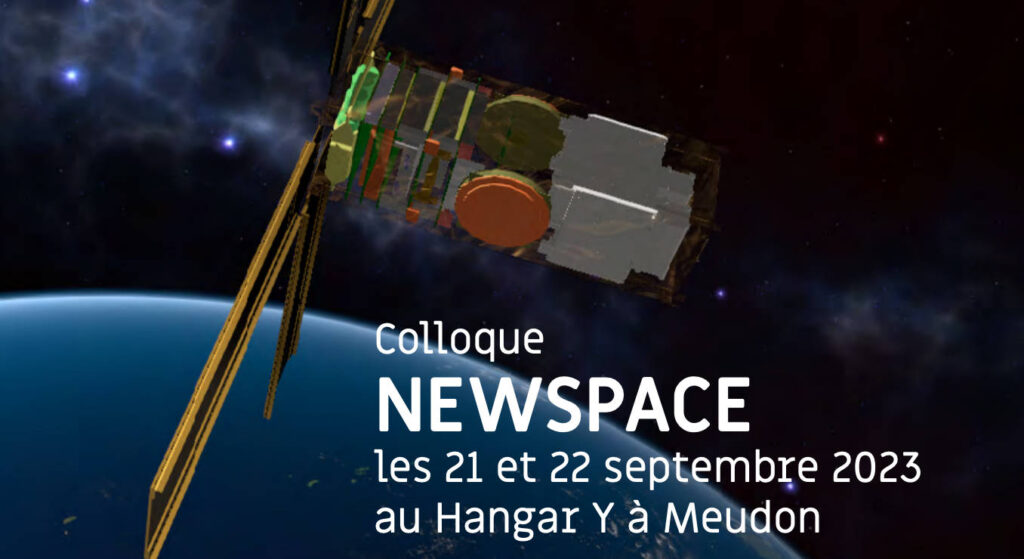
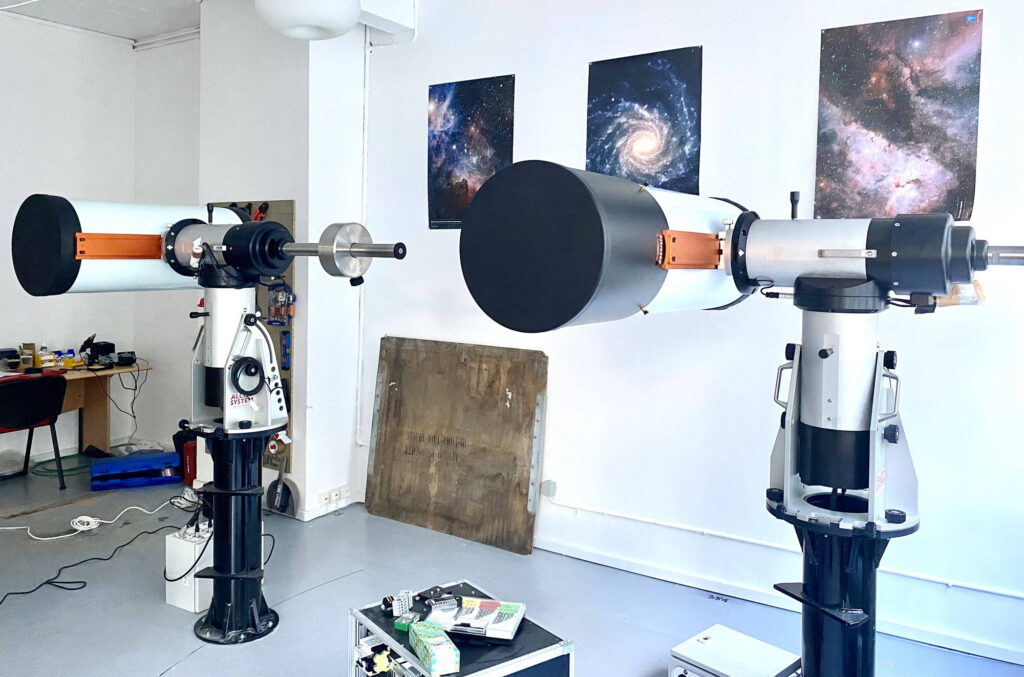
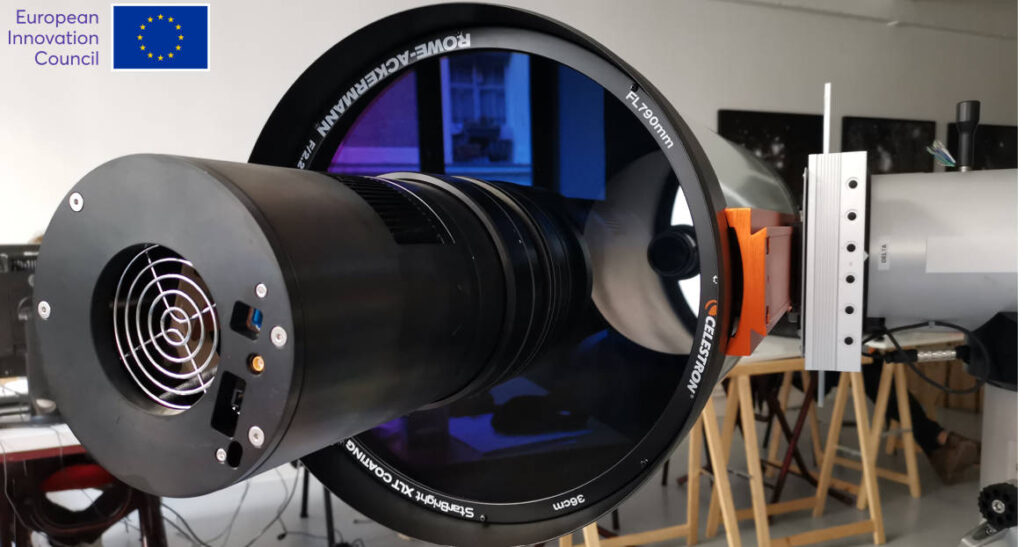
At the heart of RAMSES is a patented station that combines sensors in the visible and near-infrared bands to provide continuous tracking, day and night, across all orbits (LEO, MEO, GEO). Thanks to simultaneous observations in several spectral bands, the station produces multi-band photometric measurements enabling fine identification and characterisation of objects (light curves, attitude analysis). Pooling multiple optical channels within a single station reduces operating costs while increasing the value of the data produced.
Drawing on its recognised expertise in SSA, ONERA will contribute its know-how to selecting the optical sensors best suited to space surveillance and to the various scenarios covered by the project. These sensors will span infrared, multispectral, hyperspectral and other innovative technologies.
SIPAD, the SSA data platform
RAMSES is deploying SIPAD (Space Information Powered by Acyclic Digraphs), a multi-source, multi-sensor data management and traceability infrastructure designed to secure, validate and document every step from raw measurements through to operational services (cataloguing, collision risk management, threat detection, anomaly support).
European security and hosting
The processing chain, development environments and project management rely exclusively on European actors compatible with SecNumCloud requirements, and Aldoria has initiated an ISO 27001 certification process covering the collection, processing and distribution of data.
Economic and industrial impact
The MSTOS stations extend the operating window (day/night), increase productivity and reduce the unit cost of observations, while enhancing data value through improved metrological quality.
The first five RAMSES units will be operated by Aldoria in order to industrialise the technology and structure the service offering. Delivery of multispectral systems to customers will begin from 2030 onwards, once operational feedback has been incorporated.
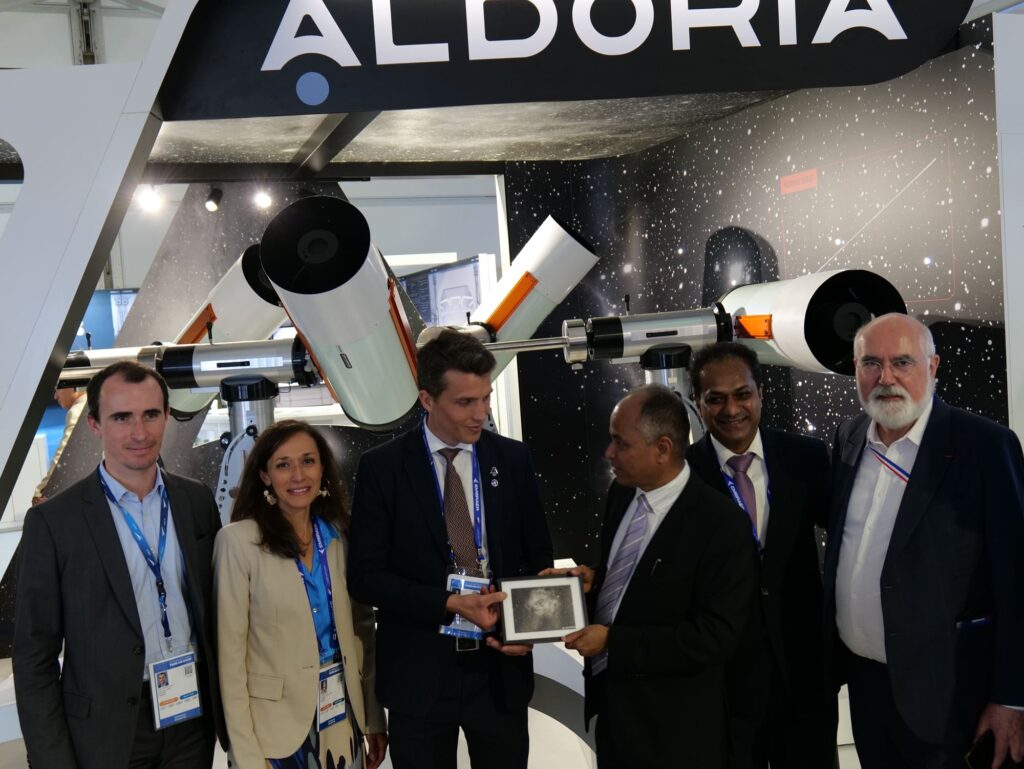
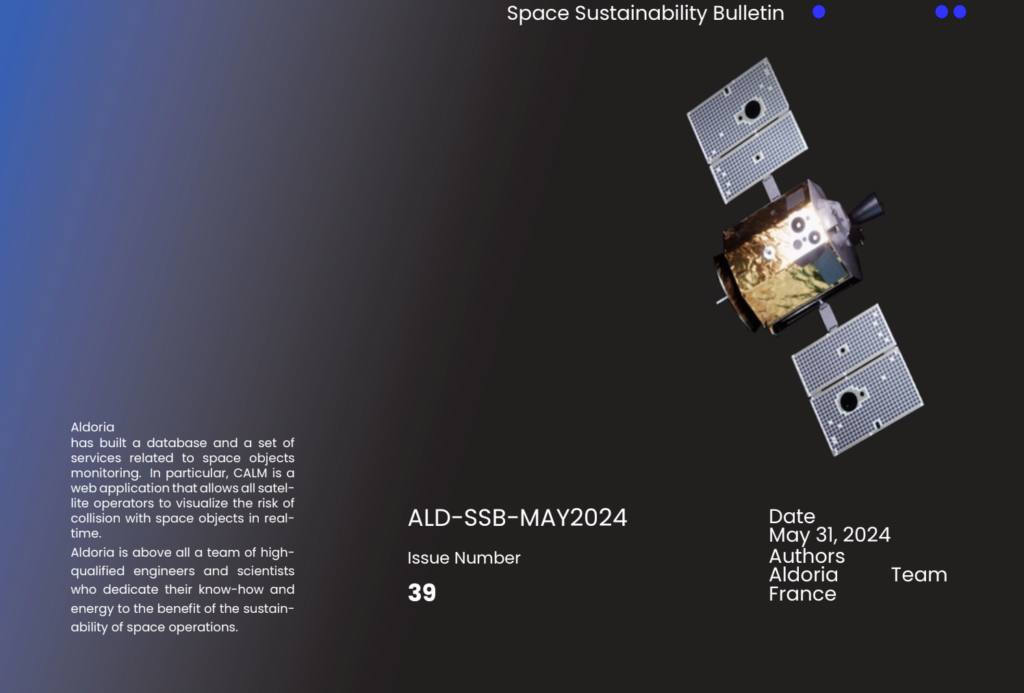
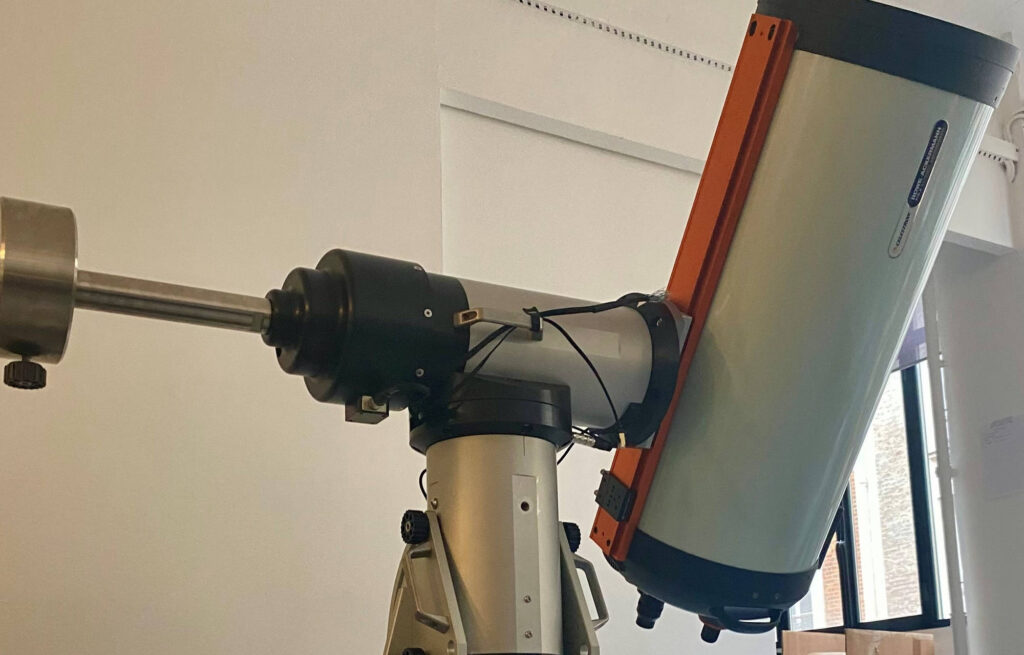
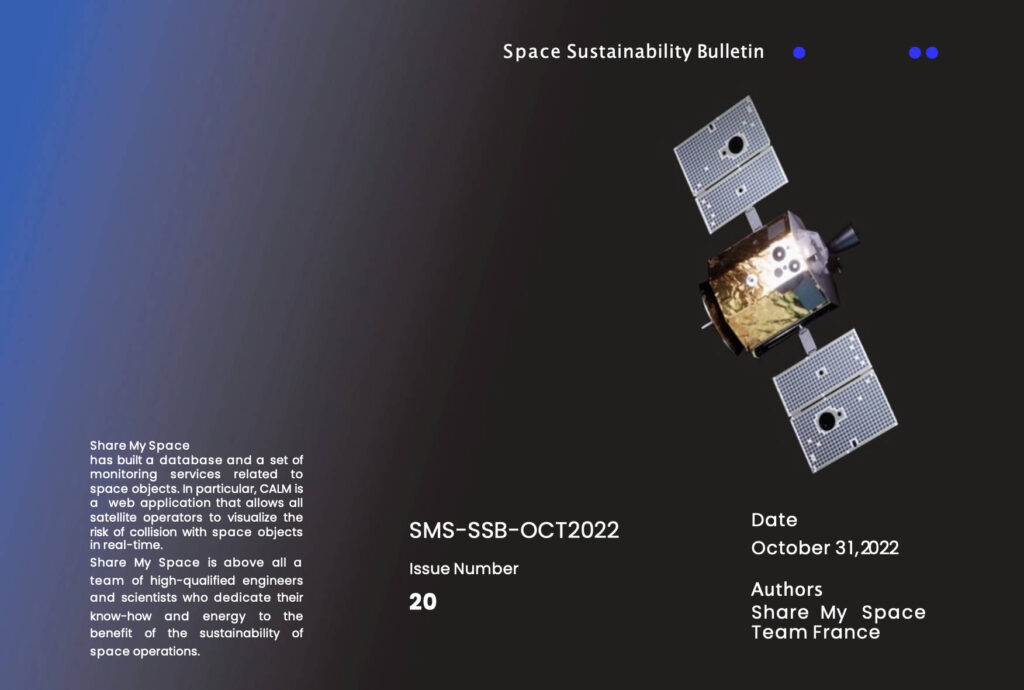
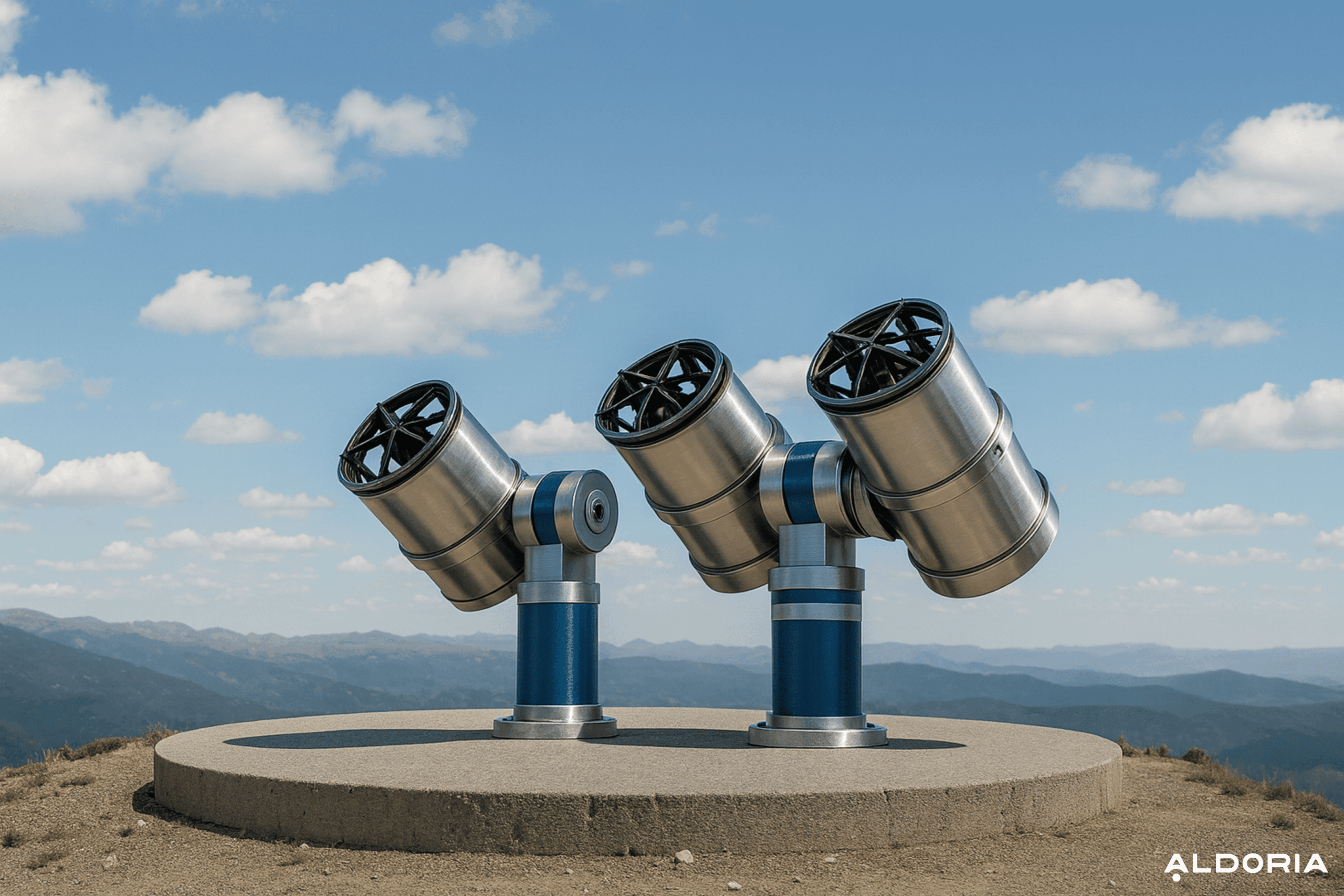
Cover image: Model of a multispectral station developed under the RAMSES project, comprising two subsystems: one equipped with an infrared sensor and one equipped with two visible-band sensors with RGB filters.
About ALDORIA:
Aldoria collects, processes and exploits data related to space situational awareness in order to protect strategic assets in orbit. By actively monitoring space debris and satellites, Aldoria helps its institutional, military and commercial customers avoid threats and adjust orbital trajectories.
Contact
Pierre SAUVETON
Head of Communications & Marketing
psauveton[@]aldoria.com
About ONERA, the French Aerospace Research Center:
ONERA, a central player in aeronautics and space research, employs around 2,200 people. Under the authority of the French Ministry for the Armed Forces, it has a budget of €336 million (2024), more than half of which comes from commercial contracts. As the state’s aerospace expert, ONERA prepares the defence of tomorrow, addresses future aeronautical and space challenges and contributes to the competitiveness of the aerospace industry. It masters all disciplines and technologies in the field. All major civil and military aerospace programmes in France and Europe carry a part of ONERA’s DNA: Ariane, Airbus, Falcon, Rafale, missiles, helicopters, engines, radars… Internationally recognised and frequently award-winning, its researchers supervise many PhD candidates.
Contact
Guillaume BELAN
Head of Media Relations
guillaume.belan[@]onera.fr
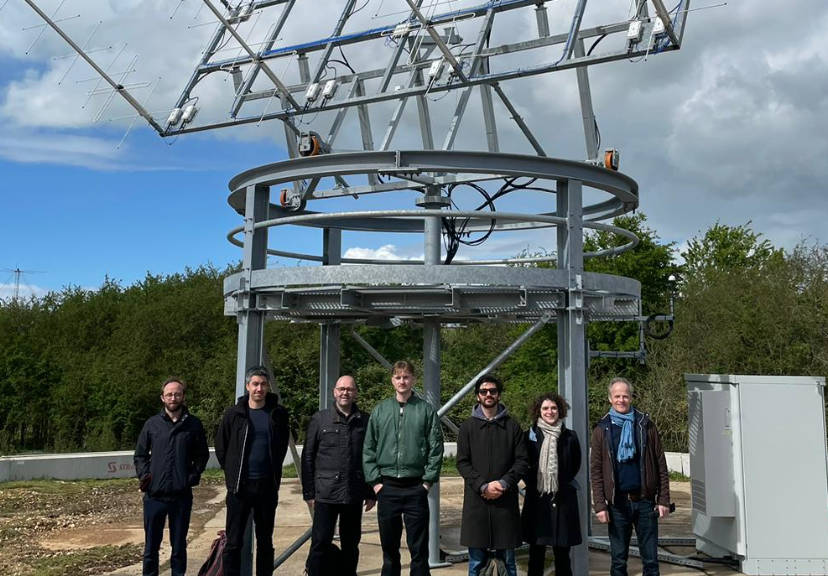
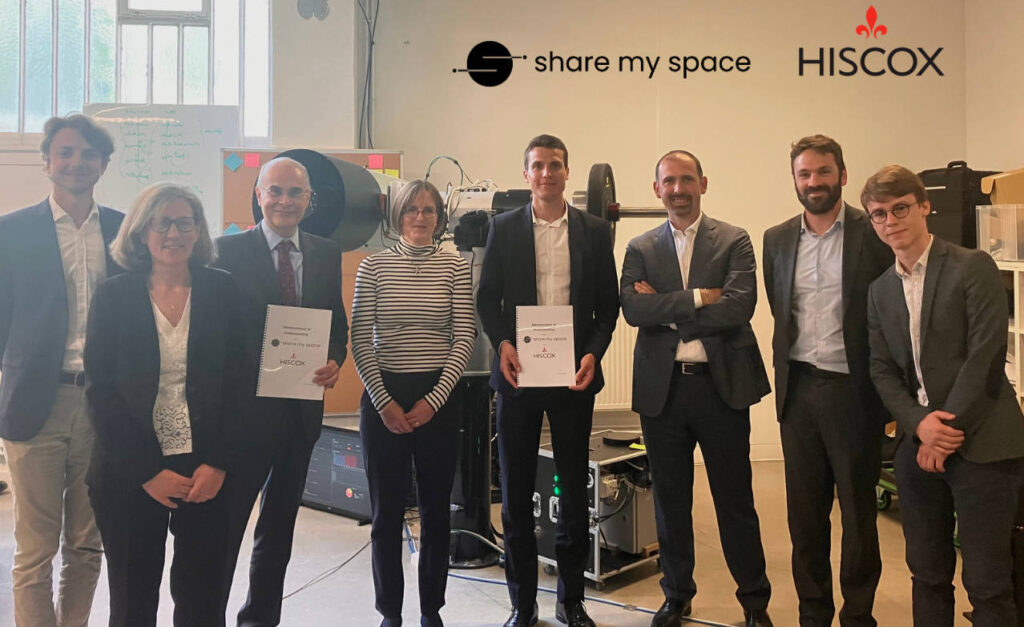
MoU signature
New Contract

France 2030

New Contract